Maps Used in Fine Art Drawings of the 90s
 Think the days earlier Google maps? The paper diverseness may now be stashed away in the depths of the attic, but could be given new life as art. The artists in this post aren't choosing old maps to save paper. They believe they are able to express something through that medium, that couldn't be accomplished any other way. Where others run into something unremarkable and disposable, creatives come across a beautiful fabric. Take a look at these skilled paper artists who are doing magical things with former maps and atlas pages.
Claire Brewster
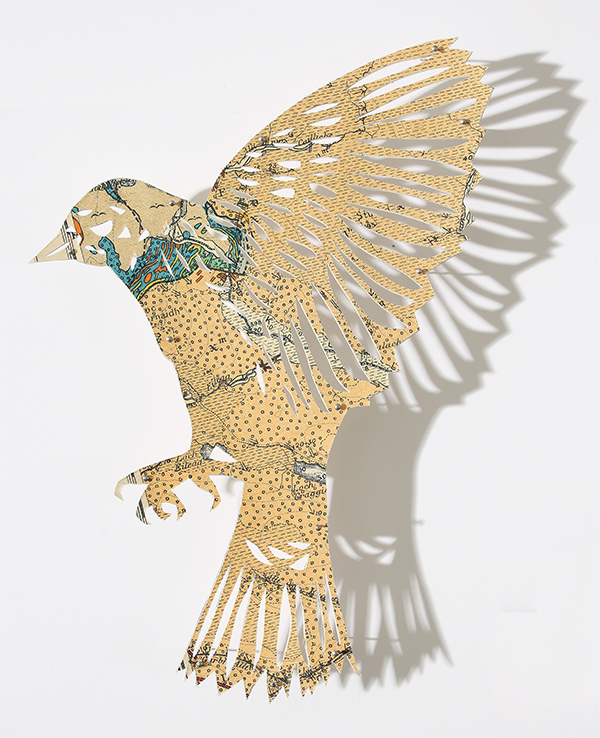
Claire Brewster is both a painter and paper creative person. She sees 'the creative person' every bit an outsider, and therefore 'ideally placed for picking upwards that which has been chucked out.' Claire uses old and out of date maps and atlases to create intricate, delicate and detailed cutting outs. They are nearly, 'retrieving the discarded, celebrating the unwanted and giving new life to the obsolete', she says.
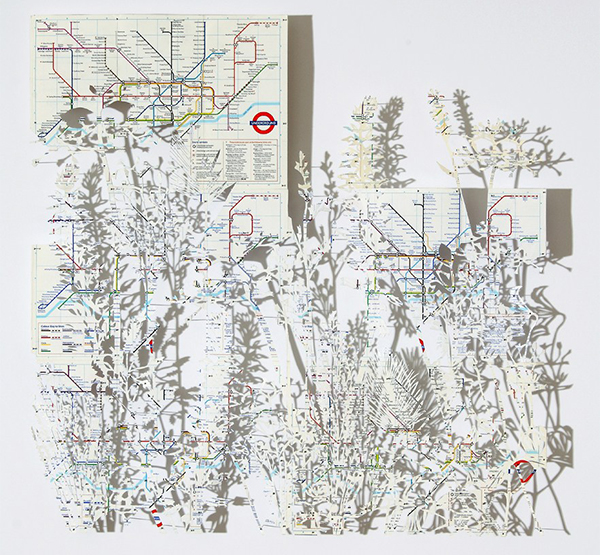
Claire takes here inspiration from the environment and uses former maps to create entomological installations of flora and fauna from imagined locations. Her birds, insects and flowers 'transcend borders and pass freely between countries with scant regard for rules of immigration or the furnishings of biodiversity'. This body of work she calls paper sculptures aims to remind us that nature is present even in the almost urban environments.
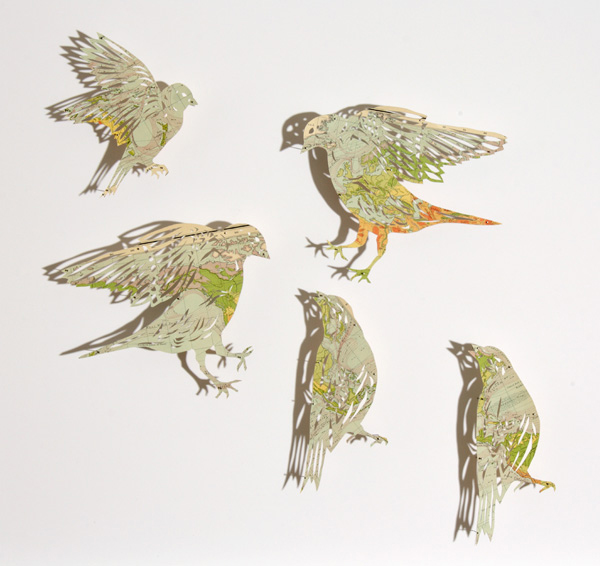
Be sure to likewise bank check out Claire'due south new body of piece of work which combines collage with paint, recently featured on The Jealous Curator.
▲
Ed Fairburn

Ed Fairburn brings a whole new meaning to the 'face of the earth'. He uses ink and pencil on maps to create incredible large scale portraits. Rivers and roads are utilised to sculpt the drawings and map out the contours of the face. He says,
I study both the concrete attributes of the terrain and the features of my chosen subjects. I search for opportunities to synchronise the two, finding similarities between the patterns, before drafting out the portrait and building the tone.
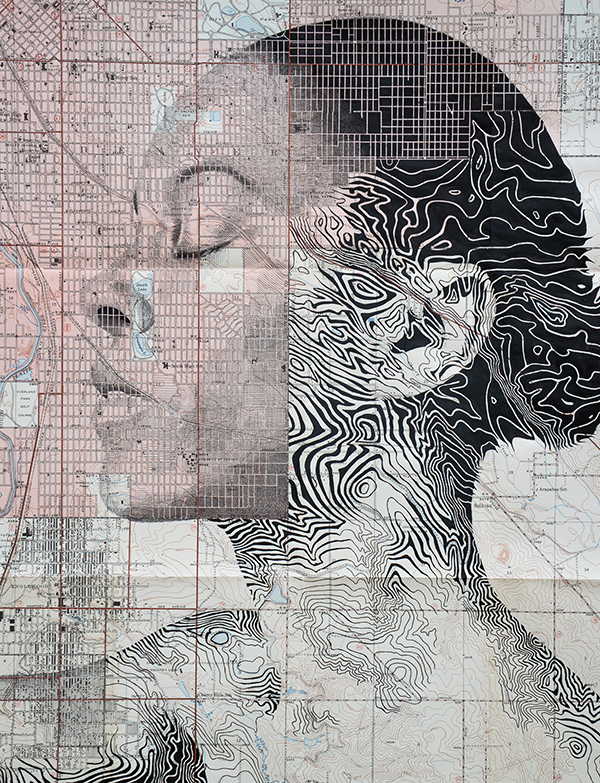
In the work Denver Southbound pictured above, two techniques have been combined. Ed uses ink over a USGS topographic map of S Denver. He says,
The crosshatching between streets, preserves the layout of towns and cities, but also follows and manipulates the weighting of contours, the organic lines which show elevation.
The work Anna Karina (offset epitome in this postal service) was inspired by French new wave films past Jean-Luc Godard.
▲
Nikki Rosato
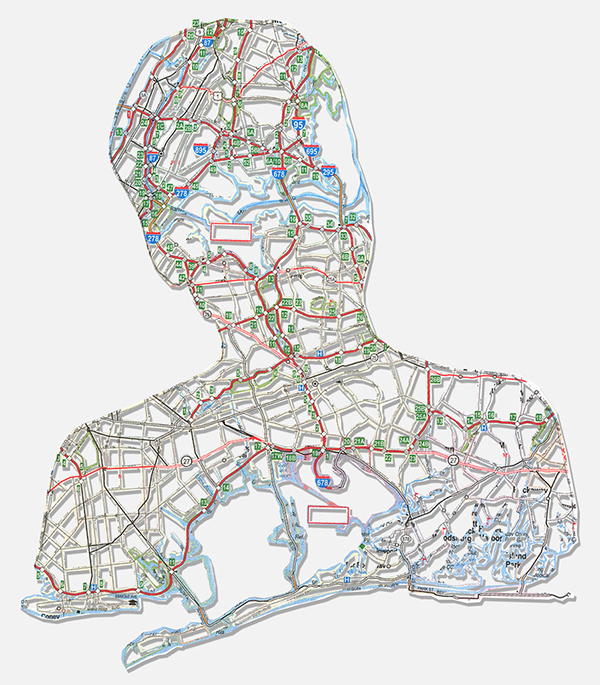
For Nikki Rosato, route maps are her medium of selection for both two and three-dimensional art works. She began using them in her work because she felt they were able to illustrate the complexities of human relationships, our attachment to place, whilst curiously resembling the lines and vessels of the homo body. Her technique involves removing the state masses from the maps, so that only the roads and rivers remain.
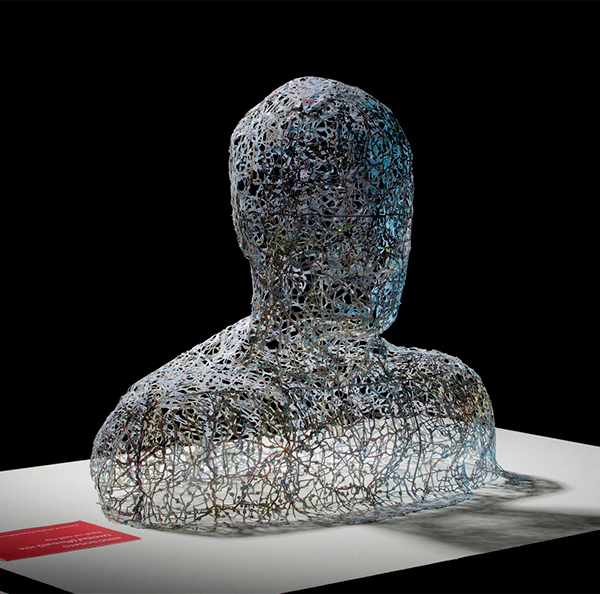
In her artist'due south statement, Nikki says,
The visual aspects of a road map are remarkably human. A map is a symbol of a living, breathing, moving body—the land is just equally alive equally we are. A map's lines carve the pathways for the rhythms and movements that undulate beyond the surface of the earth.
As we move though life, the places we inhabit and the people that we come across change and shape us into the person that we are in the present day. I am interested in the idea that a place I visited every bit a child has affected the outcome of the person that I am today.
▲
Matthew Cusick
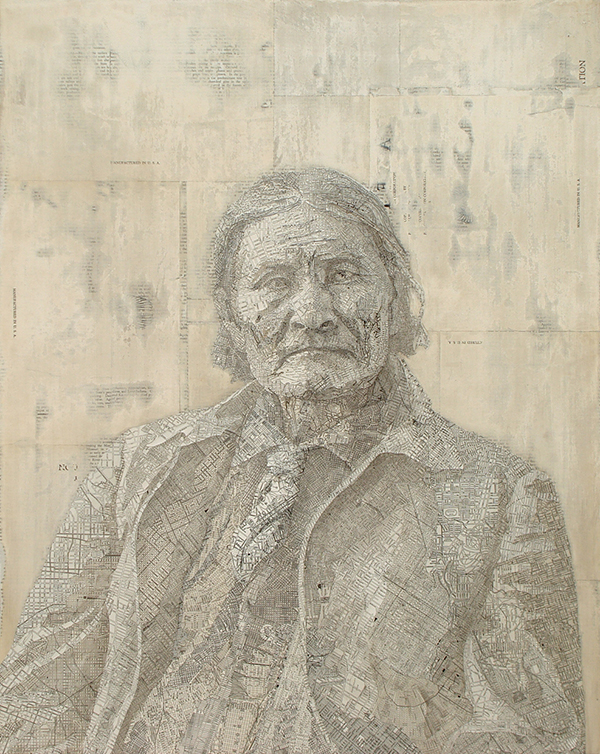
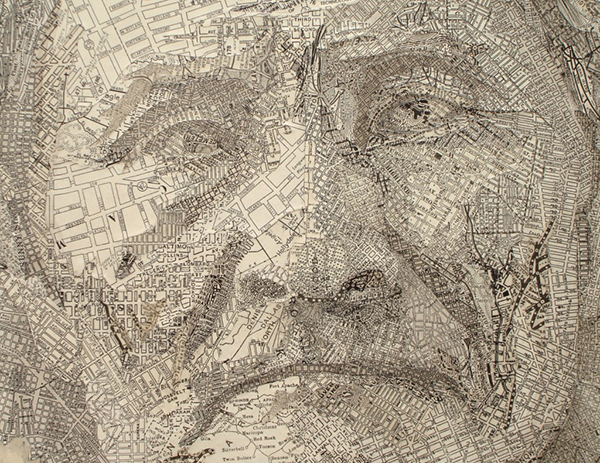
Dallas-based artist Matthew Cusick began collecting maps after graduating in 2001. He at present uses them to create incredibly detailed collages ranging from portraits and fantastical landscapes to cityscapes and abstract scenes. According to the Pavel Zoubuk gallery, Matthew's collages address a range of subjects. These include:
…the nihilistic and celebrity driven culture of Hollywood, and the male-dominated worlds of muscle cars and surfing. He is absorbed by the geography of American civilization. Cars, freeways, golf courses, bounding main waves, and infamous icons and archetypes have all been recurrent themes in his piece of work.
Encounter also some of his amazing seascapes, featured previously here.
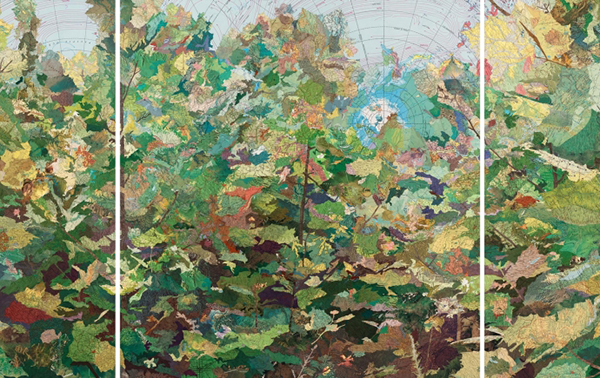
 Waldeinsamkeit (which translates as 'woods', 'solitude' and 'loneliness'). This is a iv x 10ft triptych, based on two photos the artist took in Virginia, whilst on a road trip in the 1990s. He chose to depict this subject area considering the retentivity of the moment was and then vivid. He describes the changing patterns of low-cal and forest swirling around him as 'extremely powerful, transcendental and almost hallucinogenic.'
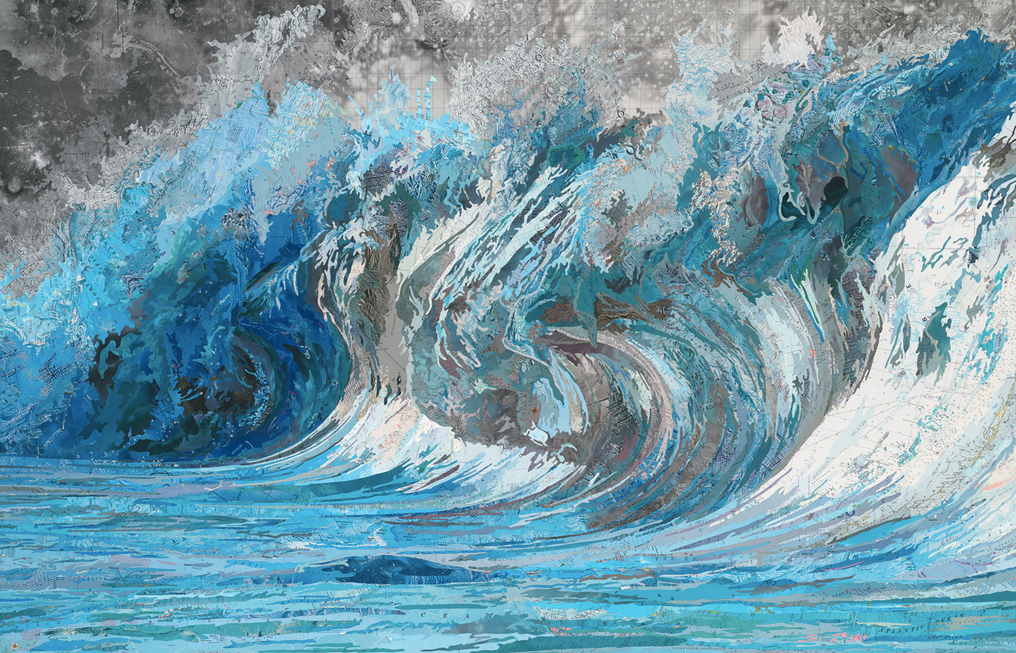
Another subject area favoured past Cusick is the depiction of dramatic waves inspired past Japanese motifs. Pictured below – Genevieve's Wave (2014)
▲
Jennifer Collier
 Jennifer Collier is a paper artist who makes objects past weaving, waxing and stitching natural and found materials. Her creations represent all kinds of everyday objects. As well equally cameras and dresses, she has made suitcases, tea sets and even a typewriter, all from found papers.
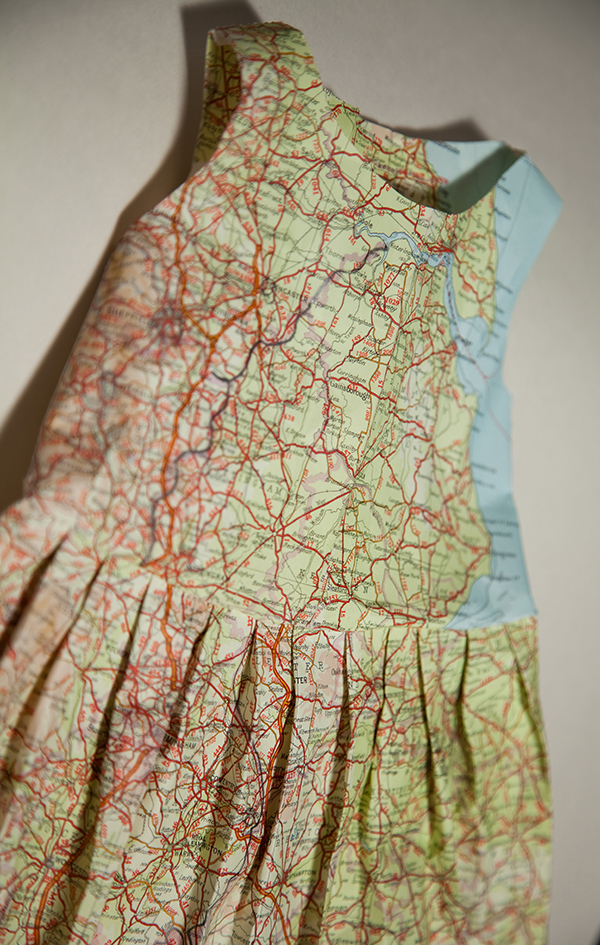
Paper is sourced from flea markets and charity shops. Jennifer'southward largest work to date is a wearing apparel that was 4.5 metres long. Works can be purchased online via her website.
▲
See more than in depth features on Claire Brewster and Jennifer Collier in the book Upcyclist:Reclaimed and Remade furniture lighting and interiors*
This post contains affiliate links marked with [*].
Thanks for supporting Upcyclist.co.britain
sherlockfainterep.blogspot.com
Source: https://www.upcyclist.co.uk/2017/08/paper-artists-recycled-maps/
0 Response to "Maps Used in Fine Art Drawings of the 90s"
Post a Comment